
Separation Challenges in Mining Operations
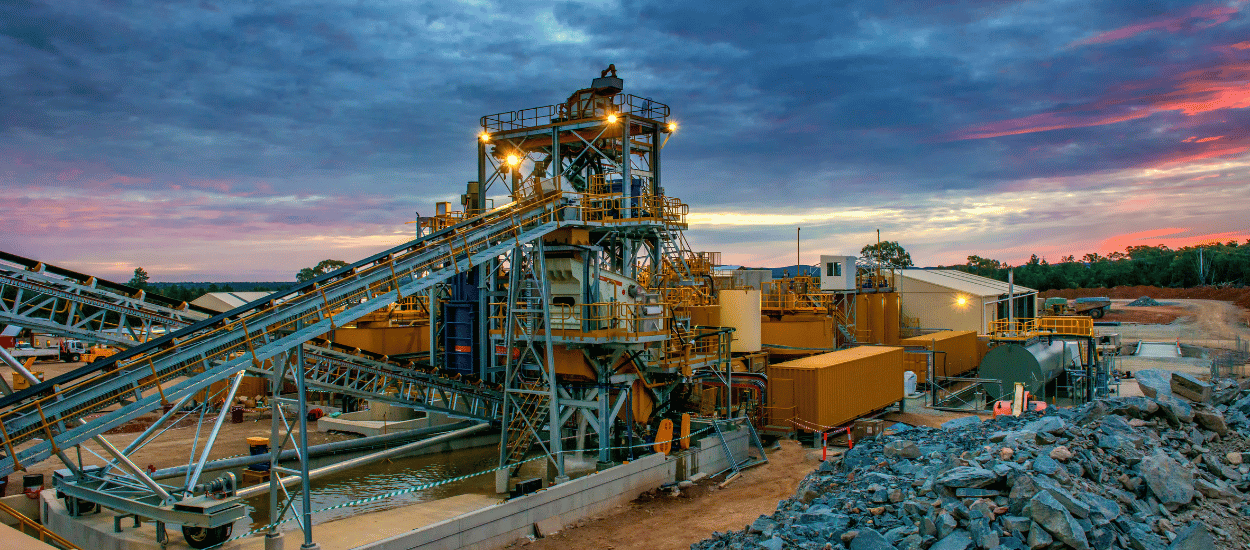
Where Oily Water, Solids, and Fine Droplets Cause Problems, and the Equipment Types Used to Address Them
Mining operations move large volumes of water, slurry, and process fluids, and each stream eventually has to be separated into its parts before it can be reused, treated, or discharged. Three recurring problem areas are oil in water, solids in liquid, and fine droplets that resist separation.
Separation challenges in mining are the points in a site’s water and process streams where two phases, such as oil and water or solids and liquid, must be split before the stream moves on. The right equipment depends on the phases involved, the size of the droplets or particles, and the conditions the equipment will see in service.
Where Separation Problems Appear at Mining Sites
Oil in Water & Oil-Water Separation
Oily water at mining sites commonly comes from equipment, fuel handling, and maintenance areas. Hydrocarbons enter wash water and drainage streams, and the water must be cleaned before it is reused or discharged.
Western Australia’s Water Quality Protection Guidelines for mining and mineral processing workshops note that mechanical servicing facilities produce washdown water and other wastes that can degrade water resources without proper management.
Free oil separates readily by gravity, but fine droplets and emulsions do not. The smaller the droplets and the closer the densities of the two liquids, the harder oil-water separation becomes.
Solids in Liquid Streams
Mining streams often carry solids that have to be removed from the liquid, whether to recover water, protect downstream equipment, or meet discharge requirements. Screening and dewatering stages handle the coarser fraction, while fine particulates call for different approaches.
Dewatering screen selection depends on solids loading, slot size, and resistance to plugging in service.
Fine Droplets, Emulsions and Particulates
Fine droplets and emulsions are the harder oil-water separation cases because small droplets rise or settle slowly. Research presented at the American Institute of Chemical Engineers (AIChE) Annual Meeting on hydrometallurgical solvent extraction describes the coalescence of dispersed droplets, which separates the two liquid phases, as a throughput-limiting step.
Streams that carry both oil and fine solids add a further complication. Fine coalescing media captures fine solid particulates along with droplets, so a high-efficiency coalescer needs an upstream strainer or filter unless the feed is very clean.
Variable Operating Conditions
Feed composition at a mining site rarely stays constant. Changes in solids loading, oil content, temperature, and chemistry can move a separator away from its design point, which is why materials of construction and design margins matter.
Coalescers, Hydrocyclones, and Screens: Equipment Types for Each Problem
Coalescers, hydrocyclones, and wedge wire screens address different separation problems, and several of these product families sit within AMACS’s phase separation range.
| Problem area | Equipment type | What drives selection |
| Oil dispersed in water | Liquid-liquid coalescers: parallel plate packs, corrugated foil, mesh and co-knit media | Droplet size, density difference between the liquids, solids content, fouling tendency |
| Oily water requiring centrifugal separation | Axial-flow hydrocyclones | Flow rate and oil content of the stream |
| Solids in liquid | Wedge wire sieve bend (curved) and flat screens | Slot size, solids load, flow, alloy |
| Fine solids carried with droplets | Coalescing media with upstream strainer or filtration | Cleanliness of the feed, droplet size |
How Does a Liquid-Liquid Coalescer Separate Oil From Water?
A liquid-liquid coalescer separates oil from water by merging fine droplets into larger ones that rise or settle faster. Liquid-liquid coalescers are physical separation devices that work by Stokes settling or direct interception.
Unlike a gravity oil water separator, which relies on density difference alone, a coalescer adds plates or media that help fine droplets merge. AMACS manufactures several types, including mesh and co-knit media, parallel plate packs, corrugated foil packs, and the MAXSWIRL® axial-flow hydrocyclone.
How Does a Wedge Wire Sieve Bend Remove Solids From Liquid?
A wedge wire sieve bend, also called a curved or dewatering screen, removes solids by letting liquid drop through while the solids slide over the surface. On a curved wedge wire screen, the wires run perpendicular to the flow, and the screen angle and flow carry the solids across.
These screens are self-cleaning, durable, and reusable. AMACS manufactures wedge wire products for industries that include mineral and aggregate processing, as covered in its overview of wedge wire industrial screens.
Why Mining Separation Equipment Is Specified Case by Case
Mining separation equipment is generally specified to the site rather than selected from a catalog, because stream composition and operating conditions differ between operations. AMACS is a custom manufacturer that works with mining customers to develop products to their specifications.
A specification typically starts from the stream itself: the phases present, droplet and particle sizes, flow range, temperature, and chemistry. Materials of construction range from stainless steels and nickel alloys to polymers, depending on the stream. AMACS’s custom solutions page describes its approach to made-to-specification internals.
If an oily water, solids, or fine droplet problem at your site needs a specification review, talk to an AMACS expert about the stream and conditions involved.
Frequently Asked Questions
What separation problems come up in mining operations?
Three recurring ones are oil in water, solids in liquid streams, and fine droplets or emulsions that resist gravity separation. Each calls for different equipment depending on the phases, the droplet or particle size, and the operating conditions.
Where does separation fit in mine water treatment?
Separation steps remove oil and solids from mine water streams so the water can be reused on site or discharged under its permit. Which steps are needed depends on the stream’s sources, its contaminants, and the requirements that apply at the site.
How does a liquid-liquid coalescer separate oil from water?
A liquid-liquid coalescer merges fine droplets into larger ones through Stokes settling or direct interception. The larger droplets then separate from the continuous liquid by their density difference.
How does a coalescer differ from a gravity oil water separator?
A gravity oil water separator relies on density difference alone to let droplets rise or settle. A coalescer adds plates or media that help fine droplets merge, which supports separation of droplets too fine for gravity alone.
Does a coalescer need filtration upstream?
Often, yes. Fine coalescing media also captures fine solid particulates, so unless the emulsion is very clean, an upstream strainer or filter is needed to protect a high-efficiency coalescer.
What is a sieve bend (dewatering) screen?
A sieve bend, also called a curved or dewatering screen, is a wedge wire screen with the wires set perpendicular to the flow direction. Water drops through the slots and the solids slide over the screen surface.
Does AMACS supply products to the mining industry?
AMACS is a custom manufacturer that works with customers in the mining industry to develop products to their specifications. The products it supplies perform liquid-liquid coalescing, oil water separation, and partial filtration.
What determines which separation equipment fits a mining stream?
The phases present, droplet and particle sizes, solids content, flow range, and stream chemistry set the starting point for equipment selection. Operating conditions and materials of construction then narrow the options.